Stylish Patio Bug Screens for Reno and Tahoe Homes
Six ways to screen a patio, porch, pergola or gazebo, from insect screen curtains to motorized retractable screens, and how to make each one look built in.
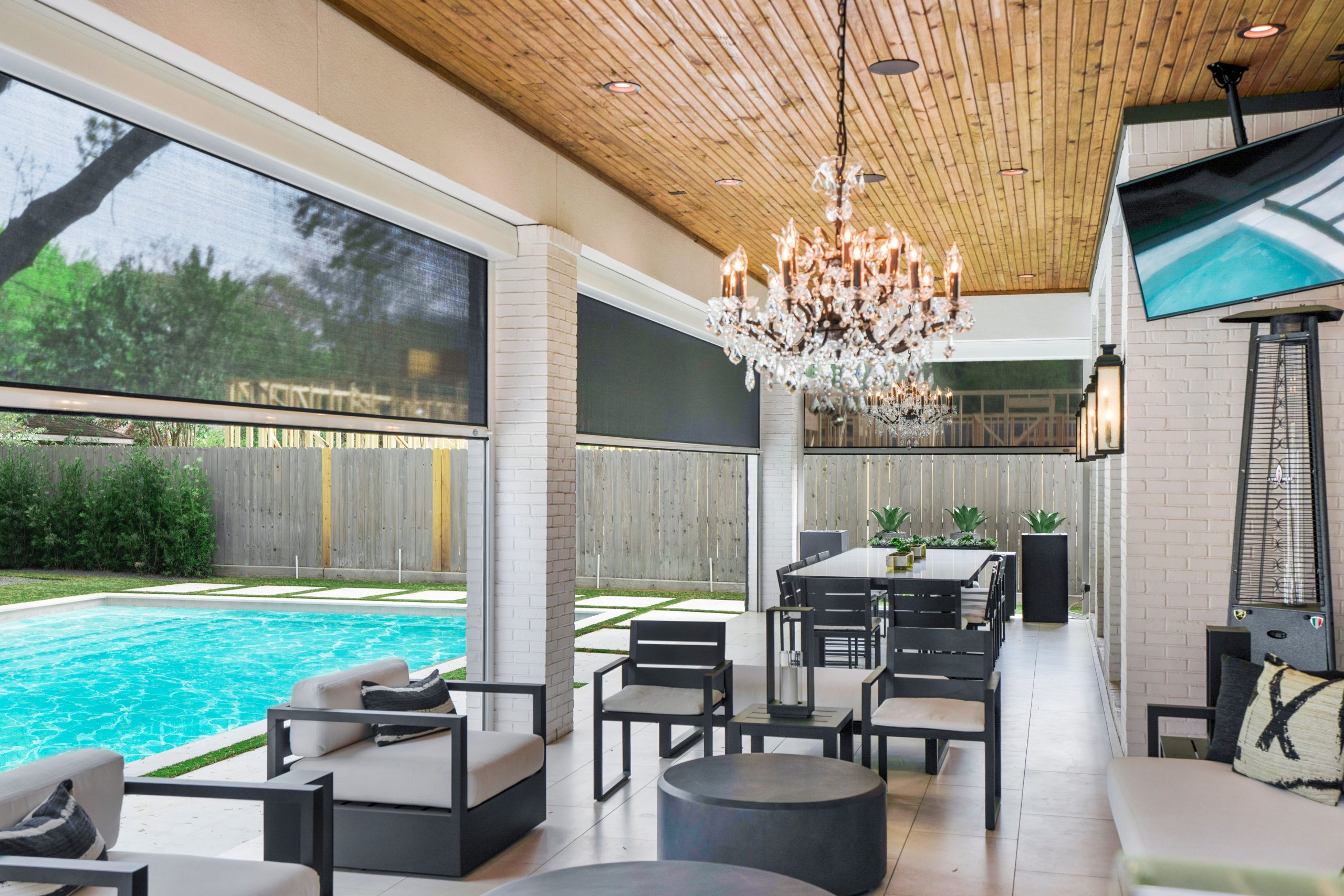
A summer evening on the patio is one of the best parts of living in Reno, Sparks or Truckee. It is also when mosquitoes show up near water, moths find the porch light and, by late summer, yellowjackets find the dinner table.
Outdoor bug screens solve that, but a screen also sits right across your view. So style matters as much as the mesh: how the screen looks when it is down, where it goes when it is up, and whether it still looks neat after a windy afternoon.
This guide compares six ways to screen a patio, porch, pergola or gazebo, from simple insect screen curtains to motorized retractable screens. It also covers what makes each one look like part of the house rather than an add-on.
Patio bug screens at a glance
Patio mosquito screens come in six main forms. Here is how they compare.
| Option | Look | Insect seal | In wind | Best for |
|---|---|---|---|---|
| Insect screen curtains | Soft, gathered folds | Gaps at the sides, ground and between panels | Moves and flaps | Occasional use, covered pergolas |
| Fixed screen panels | Framed and permanent | Good when well fitted | Stays put | Porches screened all season |
| Manual retractable screens | Hidden when raised | Depends on the side guides | Depends on the side guides | Doors and smaller openings |
| Motorized, cable-guided | Hidden when raised | Edges can gap | Can billow | Simple, sheltered openings |
| Motorized, zipper-track | Hidden when raised | Sealed edges | Holds well, but zippers can wear or jam | Budget-conscious motorized openings |
| Motorized, magnetic-track (MagnaTrack®) | Hidden or recessed when raised | Sealed edges plus a felt-pile bottom seal | Flexes and self-corrects | Wide patios, lanais, garages, windy sites |
No row is absolute. The fabric, the installation and the size of the opening all change the result.
1. Insect screen curtains: the softest look
Patio screen curtains, sometimes sold as insect mesh curtains, hang from a rod or cable like indoor drapery. They are the quickest way to soften a pergola or gazebo, and the only option here you can put up in an afternoon.
Where they fall short is the seal. Curtains leave gaps at the sides, along the ground and where panels meet, and a mosquito only needs a small one. They also move with every breeze, and Reno has plenty of afternoon breezes.
If you choose curtains, a few details make them look deliberate:
- Hang them full length and weight the hems so they fall straight.
- Choose a darker mesh. It is usually easier to see through than white.
- Match the rod or cable hardware to your light fixtures or railing.
- Add tie-backs so the curtains frame the opening when they are open.
Best for: covered spaces, occasional use, and trying the idea before committing to something permanent.
2. Fixed screen panels: always-on protection
Fixed panels turn a porch into a screened room. A good installation seals well, and there is nothing to raise or lower.
The trade-off is that the screen is always there. You look through mesh even on days you would rather have the open view, and the opening is never fully open. Frame color makes a big difference: a frame matched to the trim recedes, while a contrasting one becomes part of the facade.
Best for: porches you want screened from spring to fall and rarely open up.
3. Retractable screens: there when you want them
A retractable insect screen rolls into a housing at the top of the opening. Lower it when the bugs are out; raise it and the patio is open again. Keeping the view on the days you do not need a screen is the main reason homeowners choose retractable screens over fixed panels.
Manual retractable screens work well on doors and smaller openings. On a wide patio, motorized screens are easier to live with, because a 20-foot screen is a lot to pull down by hand.
What decides how well a retractable screen works is the side guide, the track that holds each edge of the fabric.
Cable-guided screens
The fabric runs down a taut cable at each side. These systems are simpler and cost less, but the edges can gap or billow in wind, so the seal against insects is weaker.
Zipper-track screens
Teeth along the fabric edges run inside a track, sealing the sides against insects and wind. The weak point is the zipper itself. It can wear, jam or pull out of the track, which means more service calls over the life of the screen.
Magnetic-track screens (MagnaTrack®)
MagnaTrack uses rare-earth magnets instead of zippers or cables. The fabric edges float in a magnetic track that lets the screen give under wind pressure and then pull itself back into line, so it does not jam or blow out. The manufacturer says this design eliminates 98% of the service calls that zipper and fixed-track systems generate.
A heavyweight bottom bar with a dual felt-pile seal follows uneven pavers or decking, closing the gap at the ground where insects usually get in. A single screen can span up to 30 feet wide and 24 feet tall with no center post. See our MagnaTrack motorized patio screens for sizes, fabrics and controls.
How to make a bug screen look built in
Whichever system you choose, five decisions make the difference between a screen that looks like part of the house and one that looks added on.
- Hide the housing. On a new build or remodel, the housing can be recessed into the structure so nothing shows when the screen is up. On an existing patio it surface-mounts, so look at the housing size before you choose.
- Match the frame. MagnaTrack hoods and tracks come in White, Ivory, Beige, Bronze, Silver Pearl and Night Sky, and can be color-matched to your trim, fascia or window frames.
- Pick the mesh for the view. Darker mesh and fabrics are generally easier to see through than light ones, so the view stays crisp while the screen is down.
- Give each opening the right fabric. Each screen is made with the fabric you choose. Use insect mesh where you sit in the evening and solar fabric on the side that takes the afternoon sun. Clear vinyl keeps a patio usable into the cooler months.
- Hide the controls. A wall switch, remote, app or voice control through Alexa or Google Home means no cords or cranks. Optional sun and wind sensors are also available.
What Reno and Tahoe patios ask of a screen
- Afternoon wind. Reno's afternoon wind, the Washoe Zephyr, is the toughest test for any patio screen. Curtains flap and cable-guided screens can billow, while a screen that flexes and recovers keeps its seal.
- High-altitude sun. Reno sits around 4,500 feet and Truckee near 5,800, so the sun is strong. Solar fabrics that block up to 99% of UV take the heat and glare off a west-facing patio.
- Uneven ground. Pavers settle and decks are rarely perfectly flat. A bottom seal that adapts to the surface is what stops insects from walking in under the screen.
- Long shoulder seasons. Bugs are worst in summer, but a clear vinyl screen in spring and fall lets you use the patio for more of the year.
For more on shading the outside of your home, see cooling your home naturally with exterior shades.
What do patio bug screens cost?
Prices run from inexpensive mesh curtains to fully custom motorized systems, so a per-screen figure without measurements is not very useful. These are the factors that set the price:
- the width and height of each opening, and how many screens you need
- manual or motorized operation, and the controls you add
- a recessed or surface mount
- the fabric for each screen
- the side-guide system: cable, zipper or magnetic track
The fastest way to a real number is a measured quote. We measure each opening during a free consultation and price the options side by side.
Frequently asked questions
What are some stylish options for outdoor insect screen curtains?
Look past basic white netting. Full-length mesh curtains in a darker color, with weighted hems and hardware that matches your fixtures, look deliberate on a pergola or gazebo. For a cleaner look and a better seal, a retractable screen disappears into a housing when it is raised, and its frame can be matched to your trim. Motorized magnetic-track screens such as MagnaTrack give the most finished result on wide openings.
Do patio bug screens keep mosquitoes out?
Only as well as their edges and bottom seal. Curtains and cable-guided screens leave gaps. Zipper and magnetic-track screens seal the sides, and a felt-pile bottom seal closes the gap at the ground.
Can you see through a patio insect screen?
Yes. Insect mesh is made for airflow and view-through, and darker colors usually look clearer from the inside than light ones.
Will a motorized screen hold up to Reno wind?
Choose the side-guide system with wind in mind. MagnaTrack's magnetic track is designed to flex under wind pressure and pull the screen back into line, rather than jamming or pulling out the way a zipper can. Optional wind sensors are also available.
Can one screen handle bugs, shade and privacy?
Each screen is made with one fabric, so choose by the main job of that opening: insect mesh for bugs and airflow, solar fabric for heat, glare and daytime privacy, or clear vinyl to block wind in cooler weather.
See your options in person
DLUX designs and installs MagnaTrack motorized screens for patios, lanais, pergolas and garages across Reno, Sparks, Truckee and Lake Tahoe. Stop by any of our four Hunter Douglas Gallery showrooms in Keystone Reno, Sparks, South Reno or Truckee (walk-in, no appointment needed), or book a free consultation and we will measure your openings.
See the samples in your own light.
Every window reads differently at 6,200 feet. We bring the full range to your home and measure while we're there — no charge, no obligation.
Book a free in-home visitExplore these window treatments
Every product below is available to see and operate in person at our Reno, Sparks and Truckee showrooms, with a complimentary in-home consultation and measurement before you order.
- Motorized ShadesHunter Douglas PowerView® shades you control by app, voice or schedule.
- Cellular Honeycomb ShadesDuette® honeycomb shades, from light-filtering to room-darkening fabrics.
- Plantation ShuttersMade-to-measure interior shutters in wood and composite.
- Roller ShadesClean, modern roller shades in light-filtering and blackout fabrics.
- Solar Screen ShadesSolar shades that cut glare while keeping your view.
- Custom DraperyCustom drapes and curtains sewn in designer fabrics, with hardware and installation.
- Vertical BlindsSomner® vertical blinds for sliding doors and tall windows.
- Wood BlindsReal hardwood blinds in custom stains and paint finishes.
- Woven Wood ShadesProvenance® woven wood shades in natural reeds, grasses and bamboo.
- MagnaTrack Motorized ScreensMotorized retractable patio screens on a patented magnetic track.