Are Motorized Blinds Worth It? A Practical Guide for Homeowners
Motorized blinds and shades earn their keep when they solve a real problem: a hard-to-reach window, several treatments that move together, or a daily privacy routine.
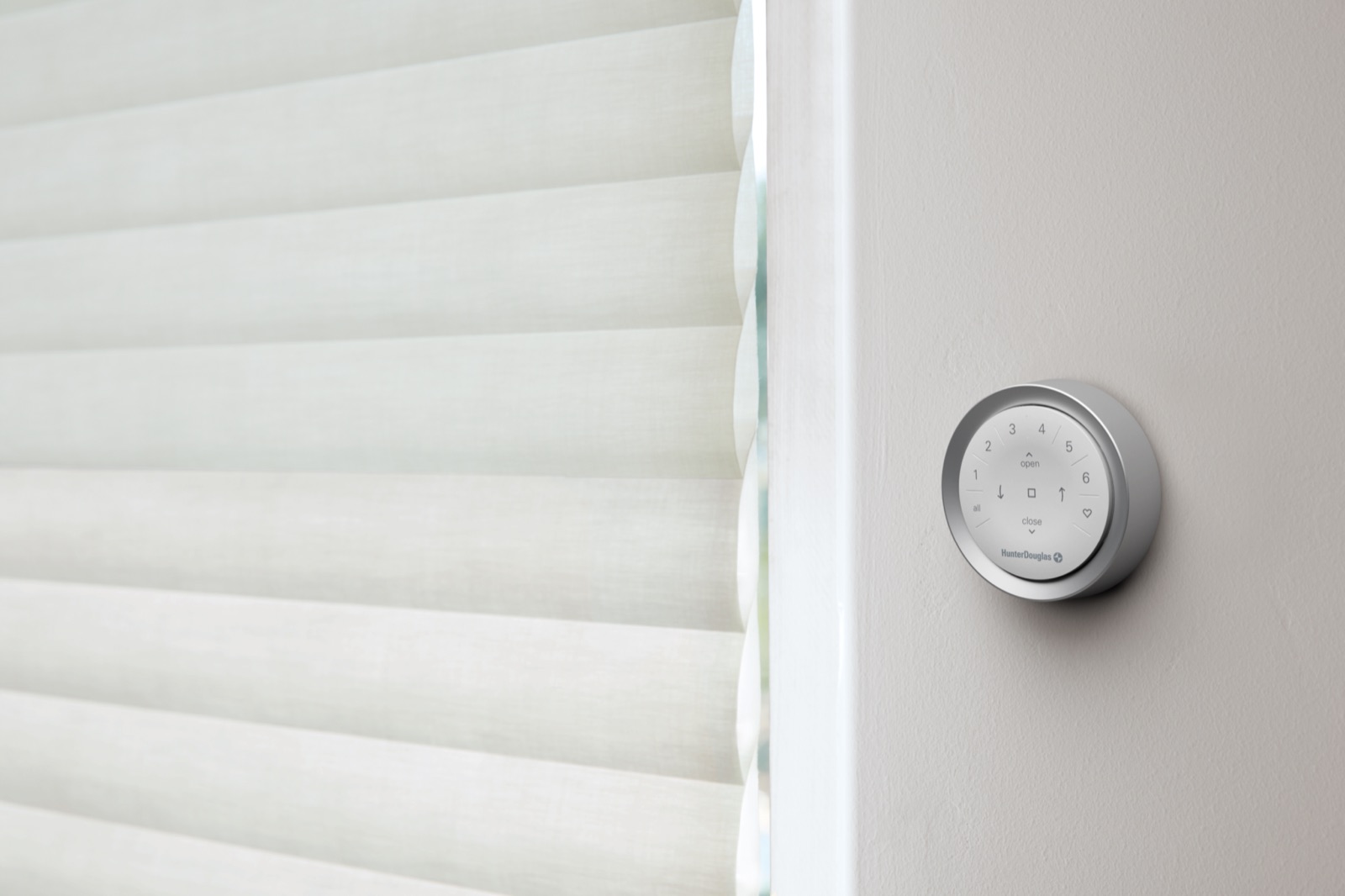
Motorized blinds or shades are often worth it when they solve a specific problem: a window is hard to reach, several treatments need to move together, or you want privacy and light control to follow a routine. They are less compelling when a simple manual shade already works well and you do not expect to use schedules, scenes, or grouped controls.
The best way to decide is to look past the novelty of pressing a button. As you explore custom motorized shade options, consider which treatments can be motorized, what movement the motor will control, how the system will be powered, and which smart-home features you will actually use.
What do "motorized blinds" and "motorized shades" mean?
Homeowners often use "motorized blinds" as a catch-all term, but blinds and shades do not move the same way.
A shade usually raises or lowers a continuous piece of fabric. A horizontal blind has slats that tilt, and the blind may also lift. On selected Hunter Douglas horizontal blinds, PowerView® Automation controls slat tilt rather than lift. Other window treatment families have their own available movements and limits.
That difference matters. Before choosing a control, ask what you want the treatment to do: raise, lower, tilt, rotate vanes, traverse across a wide opening, or control more than one layer. Do not assume that "motorized" means every part of every treatment will move.
PowerView Automation is available on selected Hunter Douglas window treatments. Depending on the chosen product and system, controls may include a remote, the PowerView App, schedules, scenes, and compatible voice or smart-home platforms. The exact options depend on the product family, dimensions, operating system, power source, and configuration.
When motorized window treatments tend to earn their keep
Windows that are awkward to operate
A shade behind a sofa, above a stair landing, or high on a wall may be easy to ignore because reaching it is a nuisance. Motorization can make an awkward window easier to use every day.
Battery access still deserves attention. A treatment can be convenient to operate but inconvenient to charge if its power connection is difficult to reach. Plan both the everyday control and future access during measurement.
Rooms with several window treatments
Opening five shades one at a time gets old quickly. Group controls and scenes can move compatible treatments together, which is useful in great rooms, bedrooms with several windows, or spaces where glare changes during the day.
Group controls can send compatible shades to selected positions together. Final alignment can vary with window size, installation conditions, and normal product tolerances.
Privacy routines you repeat every day
If you close the same shades each evening and open them each morning, a schedule can take care of that repeated task. Hunter Douglas describes PowerView schedules as a way to move shades at selected times, and scenes can coordinate compatible shades around a routine.
Schedules are useful, but they are not a substitute for checking the room. A privacy fabric, a sheer shade, and a solar shade behave differently after dark. Motorization changes how a treatment moves; it does not change the privacy or opacity of the selected material.
Cord-free operation
Many motorized shades use cord-free operation, depending on the selected product and configuration. This can also give the window a cleaner appearance.
A smart-home plan with a clear purpose
Voice control sounds impressive in a demonstration, but schedules, scenes, and a well-placed remote often do more of the everyday work. Smart-home integration is most worthwhile when it supports a routine you already have, such as closing selected shades in the evening or adjusting a group before watching television.
For PowerView Gen 3, a Gateway is required for current Alexa and Google Home integrations. Apple Home also requires a Gateway and a compatible Apple Home Hub. RemoteConnect requires a configured Gateway and internet access. Platform support and hardware requirements can change, so confirm the exact system before purchase.
Reasons to stay with manual shades
Motorization is not automatically the better choice for every window.
A manual treatment may be the sensible option when the window is easy to reach, it is adjusted only occasionally, or the room does not benefit from grouped control. Some homeowners also prefer to keep guest rooms, small utility spaces, or secondary windows simple.
Motorized systems add components that manual treatments do not need. Depending on the design, those may include batteries, chargers, wiring, a Gateway, an app account, remotes, or smart-home hardware. The PowerView App and a PowerView account are required to configure a Gen 3 Home, while the Gateway is optional for basic setup and necessary for selected connected features.
The right plan may be a mix. Motorize the windows where access, scale, glare, or routine makes a difference. Use manual treatments where the added control would go unused.
Battery, rechargeable, or hardwired power?
The best power source depends on the treatment, the opening, and whether the home is finished or under construction. Hunter Douglas documents battery wand, rechargeable, and hardwired options, but availability varies by product and configuration.
| Power approach | Often considered for | Questions to resolve |
|---|---|---|
| Replaceable battery system | Finished homes and qualifying retrofit projects | Where is the battery wand, how is it accessed, and what replacement type does the selected system use? |
| Rechargeable system | Rooms where charging access can be planned | Where is the charging point, can it be reached comfortably, and which charger fits the product? |
| Hardwired power | New construction or renovation where wiring can be planned early | Which motor and power architecture has been selected, and do the current wiring documents match the electrical plan? |
Do not rough in wiring from a generic motorized-shade diagram. Select the treatment, motor, controls, and power architecture first, then use the current manufacturer documents for that exact system.
What motorization can do for comfort and energy use
Automated shades can make it easier to manage daylight and solar heat because people are more likely to use a treatment when it moves on a schedule. A shade can close during a bright part of the day or open when useful daylight is wanted.
The fabric and construction still do most of the physical work. A cellular shade, solar shade, sheer shade, and room-darkening roller shade do not have the same insulation, glare, view-through, or privacy behavior. Motorization does not turn one category into another, and it does not guarantee lower utility bills.
Choose the window treatment for the room first. Then decide whether motorization will help you use it more consistently.
Where motorization is most useful
Motorization tends to matter most where operation is frequent or access is difficult: bedrooms with daily privacy routines, living rooms with groups of shades, and tall or obstructed windows. In kitchens, baths, and utility rooms, choose the appropriate material and power configuration before adding automation. Whole-home projects also need a consistent plan for controls, charging access, and any required Gateway or smart-home hardware.
Seven questions to ask before ordering
- Which exact window treatment family fits the room?
- What movement will be motorized: lift, tilt, vane rotation, traverse, or another function?
- Which power options are available for that product and opening?
- How will batteries or charging points be reached later?
- Will you use a remote, app, schedules, scenes, voice control, or a combination?
- Does the plan require a PowerView Gateway, internet access, another home hub, or a third-party driver?
- Is the system PowerView Gen 3 or an earlier generation?
A good consultation should answer these questions window by window. Broad compatibility statements are not enough for a finished plan.
Are motorized blinds worth the extra investment?
They are worth considering when they make difficult windows usable, simplify a group of treatments, support a real privacy routine, or fit into a properly planned smart home. They may not be worth adding to every small, easy-to-reach window.
The most reliable approach is selective. Choose the right shade or blind for each room, motorize the openings where the control will matter, and verify the power and integration details before the order is finalized.
Compare motorized shades and control options. For local help, visit the Keystone Reno showroom, South Reno showroom, Sparks showroom, or Truckee showroom, or contact DLUX.
Frequently asked questions
Can existing blinds or shades be converted to motorized operation?
Sometimes, but conversion is not universal. Compatibility depends on the product, age, dimensions, operating system, and available components. In many cases, a purpose-built motorized treatment is the practical route. Have the existing treatment identified before planning a retrofit.
Do motorized shades work if the internet goes down?
Local control options depend on the system and setup. A compatible remote may still control treatments locally, while cloud-based remote access, voice control, and other connected features may require a Gateway, internet service, or platform-specific hardware. Confirm the expected behavior for the exact PowerView generation and controls.
Can PowerView work with Alexa, Google Home, or Apple Home?
PowerView Gen 3 supports selected smart-home integrations when the required hardware and accounts are present. Current guidance requires a PowerView Gateway for Alexa and Google Home. Apple Home also requires a compatible Apple Home Hub. Confirm the platform, PowerView generation, Gateway, hub, and app requirements before finalizing the system.
Are all motorized blinds fully automatic?
No. Available movement varies by product. Some selected horizontal blinds use PowerView to control slat tilt rather than lift. Other product families may raise, lower, rotate, traverse, or control separate layers. Verify the exact function for each treatment.
Will motorized shades lower my energy bill?
Motorized shades can help you use window treatments on a consistent schedule, but savings depend on the window, treatment, fabric, climate, home, and how the system is operated. They should not be sold with a guaranteed bill reduction.
Are motorized shades only for new homes?
No. Battery and rechargeable options may work in qualifying finished-home applications, while hardwired systems can suit projects where power is planned early. Product, dimensions, access, and installation conditions determine the available choices.
See the samples in your own light.
Every window reads differently at 6,200 feet. We bring the full range to your home and measure while we're there — no charge, no obligation.
Book a free in-home visitExplore these window treatments
Every product below is available to see and operate in person at our Reno, Sparks and Truckee showrooms, with a complimentary in-home consultation and measurement before you order.
- Motorized ShadesHunter Douglas PowerView® shades you control by app, voice or schedule.
- Cellular Honeycomb ShadesDuette® honeycomb shades, from light-filtering to room-darkening fabrics.
- Plantation ShuttersMade-to-measure interior shutters in wood and composite.
- Roller ShadesClean, modern roller shades in light-filtering and blackout fabrics.
- Solar Screen ShadesSolar shades that cut glare while keeping your view.
- Custom DraperyCustom drapes and curtains sewn in designer fabrics, with hardware and installation.
- Vertical BlindsSomner® vertical blinds for sliding doors and tall windows.
- Wood BlindsReal hardwood blinds in custom stains and paint finishes.
- Woven Wood ShadesProvenance® woven wood shades in natural reeds, grasses and bamboo.
- MagnaTrack Motorized ScreensMotorized retractable patio screens on a patented magnetic track.