Top-Down/Bottom-Up Shades: How They Work and Where They Make Sense
Top-down/bottom-up shades let you keep the lower glass covered and admit daylight above it. Here is how they work and where they make sense.
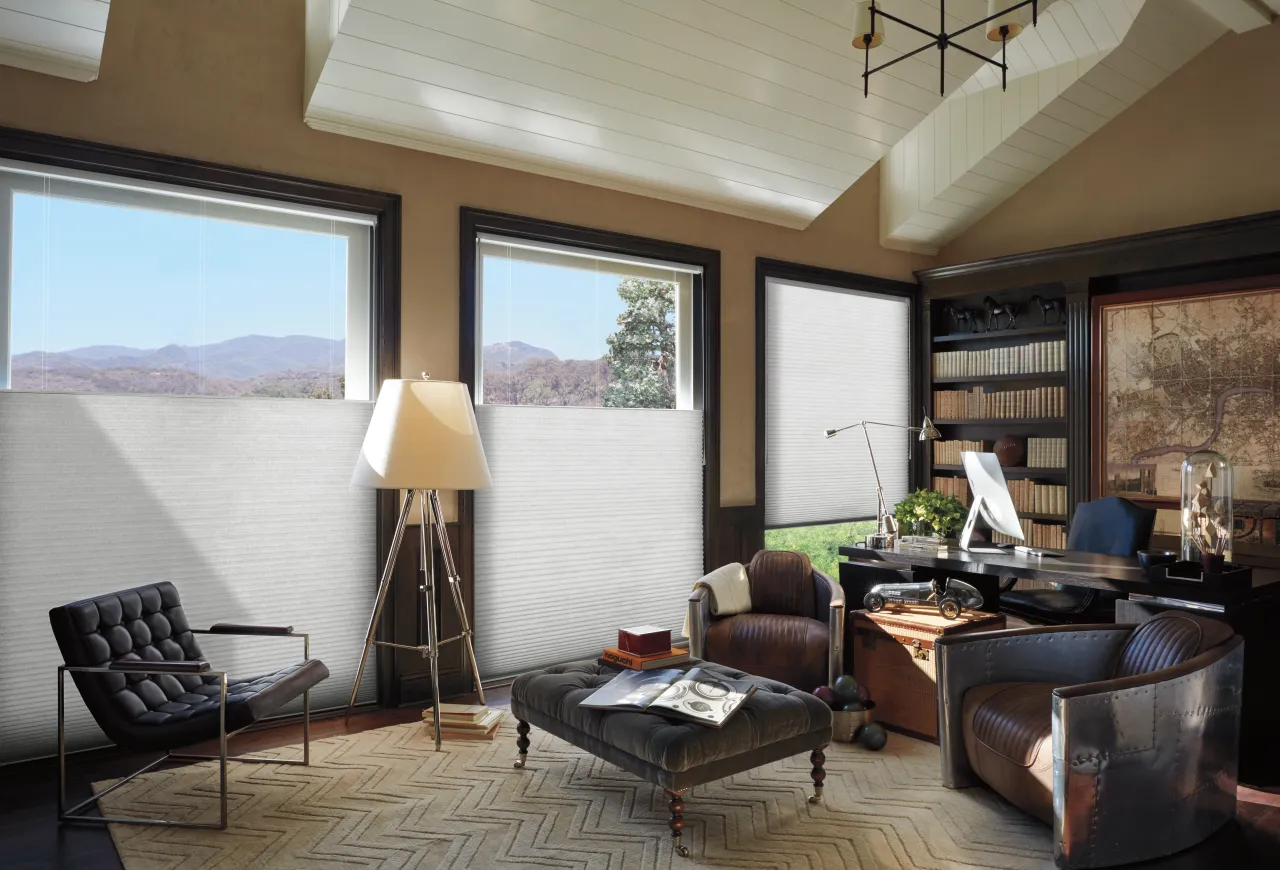
On a window facing the street, opening the shade from the bottom can expose the part of the room you wanted to keep private. Top-down/bottom-up shades give you another way to position the fabric: leave the lower glass covered and admit daylight above it.
The benefit comes from where the opening sits. It can be especially useful beside a sidewalk, near a neighboring house or in a room where you want daylight without uncovering the whole window.
What top-down/bottom-up actually means
A conventional bottom-up shade opens as its lower rail rises toward the top of the window. A top-down/bottom-up design also lets the upper edge of the fabric move down. That gives you control over openings above and below the covered area.
You might lower the top a little in the morning while keeping the lower portion closed. Later, you could raise the fabric from the bottom for a view outside. The controls and the way the rails move depend on the selected product.
Top-down/bottom-up describes an operating design, not a fabric. It does not tell you whether a shade is sheer, light filtering or room darkening, and it is separate from the number of cells in a honeycomb shade.
Which Hunter Douglas shade style fits the room?
| Selected shade family | Appearance to compare | Decision to make alongside movement |
|---|---|---|
| Duette® Honeycomb Shades | Pleated cellular fabric with an insulating structure. | Choose opacity and confirm the available fabric, size and control combination. |
| Vignette® Modern Roman Shades | Fabric folds with a tailored Roman-shade appearance. | Confirm which style and configuration supports the desired movement. |
| Provenance® Woven Wood Shades | Natural woven materials with visible texture. | Consider the weave and any liner requirements as part of the configuration. |
Hunter Douglas lists top-down/bottom-up designs for selected cellular, Roman and woven wood shades. Availability needs to be checked for the full order, including the fabric, dimensions, liner and operating system.
Choose the look as well as the movement
Duette® Honeycomb Shades are worth comparing when insulation is a priority. You can then choose the fabric opacity for the room. Light-filtering material softens incoming daylight, while a room-darkening fabric reduces more light through the covered area.
For fabric folds, look at selected Vignette® Modern Roman Shades. For natural woven texture, compare Provenance® Woven Wood Shades. Seeing them side by side helps you decide which material belongs in the room.
For a closer look at cellular construction, read our single-cell versus double-cell shade guide. It addresses the fabric structure rather than the position of the shade on the window.
Privacy depends on the sightline
Covering the lower glass can help with views from sidewalk level, but an opening at the top is still an opening. Someone on a higher balcony or an uphill property may have a different view into the room.
Check the window from the places where privacy matters. Think about the height of the glass, the position of nearby homes and what happens after dark. The fabric's opacity also affects visibility through the portion that stays covered.
For a bedroom, decide separately how much daylight you want to reduce. Moving the top rail down admits light above the fabric, even if the fabric itself is room darkening. Closing that opening and addressing edge light are different parts of the room-darkening plan.
Try the controls you would use at home
A demonstration is useful because you are choosing two things at once: the fabric and its movement. Try placing the shade where you would keep it on a normal day, then opening and closing it fully.
Manual and PowerView® Automation options are offered on selected configurations. Confirm that the quoted system provides the movement you want, along with any needed power and controls. The PowerView® App is required for programmed operation.
Bring the window into the conversation
A photo taken from inside and one showing the outside sightline can help our DLUX Window Coverings team understand the problem you want to solve. During an in-home consultation, we can look at the window, compare materials and measure for the available configurations.
Start at one of our Keystone Reno, South Reno, Sparks or Truckee showrooms, or contact DLUX to arrange an in-home visit.
See the samples in your own light.
Every window reads differently at 6,200 feet. We bring the full range to your home and measure while we're there — no charge, no obligation.
Book a free in-home visitExplore these window treatments
Every product below is available to see and operate in person at our Reno, Sparks and Truckee showrooms, with a complimentary in-home consultation and measurement before you order.
- Motorized ShadesHunter Douglas PowerView® shades you control by app, voice or schedule.
- Cellular Honeycomb ShadesDuette® honeycomb shades, from light-filtering to room-darkening fabrics.
- Plantation ShuttersMade-to-measure interior shutters in wood and composite.
- Roller ShadesClean, modern roller shades in light-filtering and blackout fabrics.
- Solar Screen ShadesSolar shades that cut glare while keeping your view.
- Custom DraperyCustom drapes and curtains sewn in designer fabrics, with hardware and installation.
- Vertical BlindsSomner® vertical blinds for sliding doors and tall windows.
- Wood BlindsReal hardwood blinds in custom stains and paint finishes.
- Woven Wood ShadesProvenance® woven wood shades in natural reeds, grasses and bamboo.
- MagnaTrack Motorized ScreensMotorized retractable patio screens on a patented magnetic track.